For occasional surplus, customer pickup is usually the simplest option; for clustered neighborhood orders, self-delivery can work; for wider or recurring routes, a delivery partner or community pickup hub may save time.
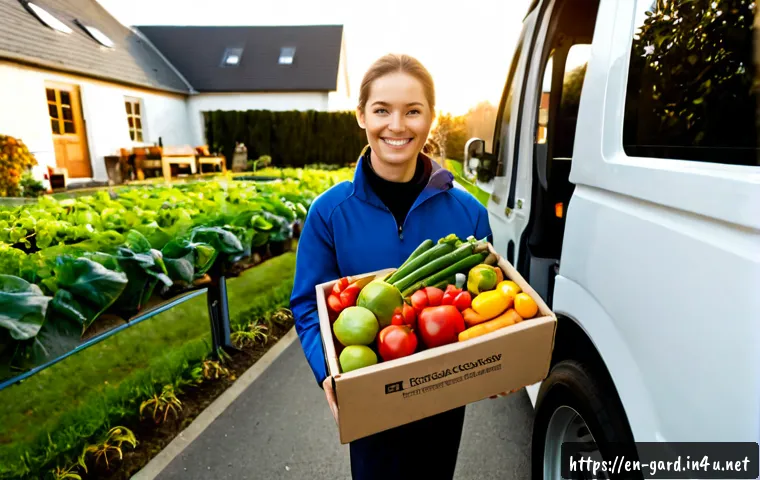
The right produce delivery system depends less on the size of your garden than on weekly order volume, delivery radius, and how much packing and driving you can reliably handle.
Pre-orders and subscription produce boxes can make harvest planning easier because customers commit before you pack. Good handling matters: temperature, careful packing, labels, and realistic delivery windows help protect produce quality.
Before offering doorstep delivery, compare the full cost of packaging, payment processing, fuel, labor, and missed-delivery risk. Local food-sales, labeling, tax, insurance, and delivery requirements can differ by location, so verify the rules that apply to your setup.
At a Glance
- Pickup is often the lowest-cost choice because it reduces last-mile driving.
- Pre-orders and subscription boxes can help match packing work to expected harvest demand.
- Route planning, insulated packaging, and clear labels support more consistent local produce distribution.
| Distribution model | Cost and time | Control | Best fit |
|---|---|---|---|
| Customer pickup | Lower delivery expense; less driving | High control over handoff times | Occasional surplus and small local order lists |
| Self-delivery | Fuel, labor, and route time increase | High control over customer service | Dense neighborhood orders with practical delivery windows |
| Subscription produce boxes | More recurring packing work | High control over box contents and communication | Regular harvests and repeat customers |
| Partner location or courier | May add service or handling costs | Less direct control over final handoff | Broader reach or routes that are difficult to run alone |
The Best Distribution Model Depends on Order Volume and Delivery Radius
The best system is the one you can repeat without turning harvest day into an unpredictable driving day. A small number of scattered orders may make individual delivery inefficient, while several orders near one another may justify a planned route. Start with the smallest practical system, then add tools, delivery options, or partners when demand and administration grow.
Three Quick Choices: Pickup, Self-Delivery, or a Delivery Partner
Choose pickup when protecting time and margin matters most. Choose self-delivery when customers are close together and you can offer a clear delivery window. Consider a community hub, partner location, delivery platform, or third-party courier when individual stops take too much time or prevent you from harvesting and packing properly.
Start With Pre-Orders Before Building a Full Delivery Schedule
Pre-orders reduce guesswork. Instead of harvesting, packing, and hoping everything sells, you can collect orders first and pack toward known demand. A simple order form or farm-to-consumer sales platform can help organize customer names, pickup details, quantities, and substitutions. Produce availability can change with weather, seasonality, harvest timing, and yield, so avoid promising a fixed selection before you know what is ready.
What a Reliable Harvest-to-Customer Workflow Includes
A dependable workflow connects harvest, sorting, cooling where appropriate, packing, labeling, payment confirmation, and handoff. Keep the process simple enough that another person could follow it if needed. Clear labels and reusable crates or insulated totes can improve handling consistency, especially when several orders are packed at once.
Compare Pickup, Local Delivery, Subscription Boxes, and Partner Locations
Customer Pickup: Lowest Delivery Cost and Simplest Operations
Pickup points can reduce last-mile delivery time because customers come to a shared location instead of receiving separate doorstep deliveries. This model suits home gardeners with occasional surplus, community gardens with scheduled distribution, and sellers who want a limited weekly pickup period. The tradeoff is convenience for the customer, so communicate the pickup date, time, location, and uncollected-order policy clearly.
Doorstep Delivery: Higher Convenience but More Route Expense
Doorstep delivery can be appealing to customers, but each stop adds route time, fuel use, coordination, and missed-window risk. Set delivery zones and grouped delivery days rather than accepting any address at any time. A route-planning tool may be useful when stop order, delivery windows, and address changes become difficult to manage manually.
Weekly Produce Boxes: Predictable Demand With More Packing Work
Subscription produce boxes or CSA-style boxes can create a steadier order pattern. They can also help growers estimate demand before packing. However, recurring boxes require careful communication about changing crop availability, substitutions, and pickup or delivery expectations. A consistent box format may simplify packing, but customers should understand that seasonal produce selection can vary.
Community Hubs and Local Partners: Broader Reach With Less Individual Driving
A community center, workplace, neighborhood host, market, or other local partner may function as a consolidated pickup point if the arrangement and applicable rules allow it. This can reduce individual driving while expanding access beyond your immediate street or neighborhood. Confirm eligibility, storage expectations, food-handling responsibilities, and any market or partner requirements before committing.
Estimate Costs Before You Offer Produce Delivery
Delivery is not only a fuel decision. It is a time, handling, and fulfillment-cost decision. List every step that changes when you move from pickup to delivery, then decide whether customers, order minimums, or a smaller delivery radius can support that added work.
Packaging, Labels, Payment Processing, Fuel, and Labor
Include reusable crates, insulated totes, bags or boxes, labels, payment processing, fuel, and the labor needed to harvest, pack, load, drive, and communicate with customers. Delicate produce may need more protection than sturdy items. Clear labeling can prevent mix-ups and makes a multi-order packing table easier to manage.
Calculate Delivery Cost Per Order and Minimum Order Values
For each planned run, total the route-related costs you can identify, then divide by the expected number of completed orders. This gives you a working delivery cost per order to compare with pickup. If one or two small orders create most of the driving, consider a pickup option, a delivery zone, a scheduled route day, or a minimum order value that fits your own costs and local customer demand.
When Route-Planning Software or a Courier Service Can Add Value
Paid delivery software may be worth comparing when address management, delivery windows, customer notifications, or route changes consume too much time. A courier service may be worth evaluating when driving limits your harvest, packing, or sales work. Compare the full terms, handling process, service area, and per-order impact before choosing either option. Check the provider’s official details for current features, service conditions, and fees.
Build a Safe, Repeatable Packing and Delivery Workflow
Fresh produce quality can decline quickly when temperature, handling, and delivery timing are poorly managed. Your system does not need to be complicated, but it should be repeatable from the garden to the customer.
Harvest Timing, Sorting, Cooling, and Protecting Delicate Items

Harvest as close to the planned handoff as practical for your crops and workflow. Sort items before they reach the packing area, separate delicate produce from heavier items, and use clean containers. Reusable crates and insulated totes can help keep orders organized and reduce unnecessary handling. Confirm whether specific crops need refrigeration or special handling based on local guidance and the produce involved.
Order Confirmation, Substitution Policies, and Delivery Windows
Send a clear confirmation before pickup or delivery. State what is included, what may be substituted, the pickup period or delivery window, and how customers should report a missing or damaged item. A simple substitution policy prevents last-minute uncertainty when weather or harvest yield changes availability.
Recordkeeping and Local Compliance Checks to Complete Before Launch
Keep basic records of orders, dates, customer communications, and distribution locations. Before selling, check local food-safety, labeling, tax, market, farm-direct sales, insurance, and delivery requirements. Rules may vary by location and by sales channel, so do not assume that a home garden, market stall, community hub, restaurant sale, or delivery service follows the same requirements.
Choose a Setup for Your Selling Situation
Occasional Surplus From a Home Garden
Use a short pre-order list and a single pickup window. This keeps packing manageable and avoids building a delivery route for irregular harvest volume. If you offer delivery at all, limit it to a small area and scheduled day.
Neighborhood Orders and Small Weekly Harvests
Use one or two delivery windows and group nearby orders. A basic local delivery software tool can become useful when order details and addresses are no longer easy to track in one place. Keep pickup available for customers outside the efficient route area.
CSA-Style Subscriptions and Recurring Delivery Routes
Use recurring order records, a clear substitution policy, consistent box labels, and planned route days. Subscription produce boxes work best when customers understand that the contents follow the season and harvest. Reliable communication is as important as the box itself.
Scaling Toward Restaurants, Retailers, or Community Organizations
As order volume grows, consolidated drop-offs may be more practical than many individual homes. Review the buyer’s eligibility rules, packaging expectations, labeling needs, delivery schedule, and handling requirements before promising supply. Larger channels may require systems that differ from direct-to-consumer sales.
Selection Criteria and Comparison Summary
Choose pickup if you need the lowest delivery expense and the simplest routine. Choose self-delivery if orders are concentrated enough to create efficient routes. Choose subscription boxes if recurring customers can help you plan harvest and packing. Choose a hub, software tool, or courier option when administrative work and driving start limiting growth. Compare delivery costs per order before committing to a route, and check official provider pages for route-planning, insulated packaging, fulfillment, and farm sales software conditions that match your needs.
Final Thoughts
A produce delivery system should protect both freshness and your available time. Begin with pre-orders, clear handoff rules, and a manageable pickup or route schedule. Add complexity only when there is enough repeat demand to support it. Consistent packing and customer communication are often more valuable than offering every possible delivery option.
Useful Information to Keep in Mind
Use delivery zones to avoid scattered stops. Keep delicate produce separated from heavier items. Label each order before loading it. Plan for substitutions when harvest conditions change. Review whether reusable crates or insulated totes would make packing and transport more consistent.
Important Considerations
This framework does not determine local legal, tax, insurance, food-safety, labeling, refrigeration, or sales-channel requirements. Costs, customer demand, crop handling needs, software fees, courier pricing, and profitability vary by operation and location. Verify applicable rules and service terms before launching or expanding a produce delivery program.
Frequently Asked Questions
Q1. What is the most affordable way to distribute produce from a small garden?
A1. Customer pickup is often the most affordable starting point because it reduces last-mile driving, fuel use, and delivery time. Pre-orders paired with one scheduled pickup period can also help you pack only what customers have requested.
Q2. Is local produce delivery profitable after fuel, packaging, and delivery time?
A2. It depends on your order volume, delivery radius, packaging needs, route efficiency, and labor time. Compare delivery costs per order before committing to a route, then assess whether grouped stops, delivery zones, pickup, or minimum order values better fit your operation.
Q3. Do small growers need special packaging or insurance for doorstep produce delivery?
A3. Packaging needs depend on the produce, handling conditions, and delivery process. Reusable crates, insulated totes, and clear labels can improve consistency, but local insurance, labeling, food-safety, and delivery requirements vary. Check the rules and applicable coverage requirements in your location before offering doorstep delivery.